
Documentary Photography Anti-far right protest in Bournemouth


Who organised the Bournemouth Unity Protest?
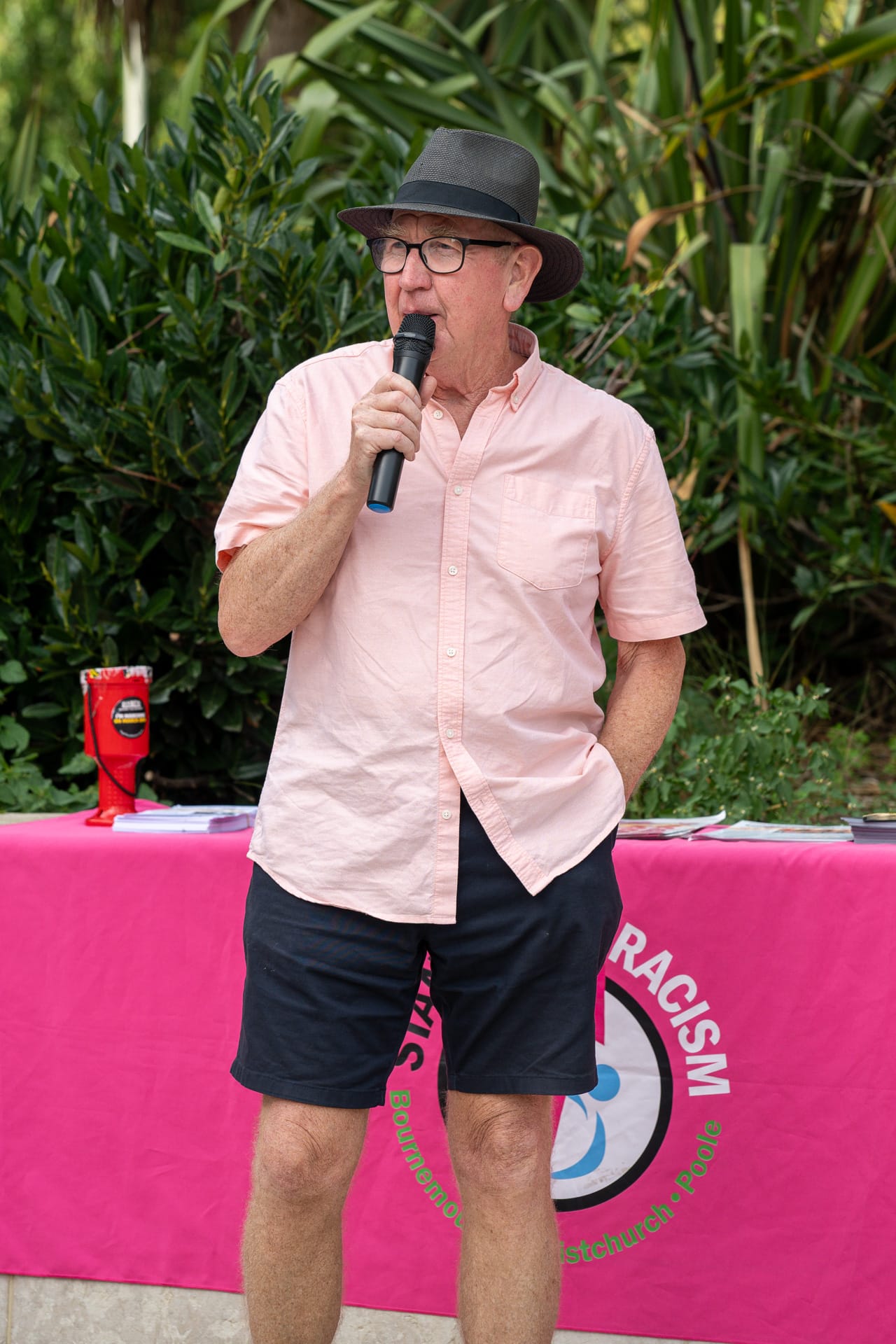
The Bournemouth Unity Demo was organised under the banner of Stand Up To Racism (SUTR) as part of its wider programme of Unity demonstrations against racism and the far right. SUTR describes itself as a national organisation bringing together anti-racists, trade unionists, refugee groups, campaigners and community organisations. In Bournemouth and across Dorset, its local activists have been organising against far-right demonstrations and supporting refugees and asylum seekers for several years, including regular counter-protests in Bournemouth from summer 2025 onwards.
The demonstration in Bournemouth
Around 100 people gathered in Bournemouth on Saturday 3 October for the Unity demonstration. The event was one of several taking place around Britain on the same day. The Bournemouth turnout was smaller than the 200 people recorded at the February 2026 Bournemouth Unity demonstration, with many local activists understood to have travelled to larger demonstrations elsewhere in the region. The demonstration itself provided a visible public gathering of people opposed to racism and far-right politics in the town.
Part of a wider movement
Today’s demonstration took place against the backdrop of renewed far-right and anti-immigration activity across Britain. On the same day, sizeable anti-migrant demonstrations and counter-demonstrations were taking place in Southampton and Dover, requiring significant police operations. The Bournemouth event therefore formed part of a wider pattern of local communities organising publicly in response to the growth of anti-immigration and far-right activism, with different towns and cities seeing their own demonstrations, counter-demonstrations and community responses.
Why I Support These Causes
I’m supporting these demonstrations because the society I want to live in is one where people are valued for who they are rather than judged by where they were born, the colour of their skin, their faith or the circumstances that brought them here. I’ve always been uncomfortable with the idea that fear, suspicion and division should be used to set one group of people against another. That doesn’t mean I think every argument about immigration, asylum or how our communities are run is straightforward, or that those questions shouldn’t be debated; they absolutely should. But I do believe that we can have those conversations without turning human beings into targets or allowing racism and hatred to become normalised.
Perhaps unsurprisingly, there is also a connection between this and the way I approach photography. I’m interested in people: their lives, their relationships, their individuality and the things that make each of us different. Much of my work is about giving people space to be themselves and telling their stories with honesty and respect. Supporting anti-racist and anti-fascist causes feels like an extension of that belief — that everyone deserves to be seen as a person, rather than reduced to a label.
I’m also a great believer in community. I live in a place I love, surrounded by people and landscapes that matter enormously to me, and I want the communities I photograph and live amongst to be places where people look after one another. I don’t expect everyone to agree with me, and I certainly don’t have all the answers. But I do think that when prejudice and intolerance are being given a louder voice, staying silent isn’t something I’m comfortable with. So I’ll continue to photograph these moments, to bear witness to them, and to support the idea of a society that is more compassionate, inclusive and willing to stand together rather than against one another.
